



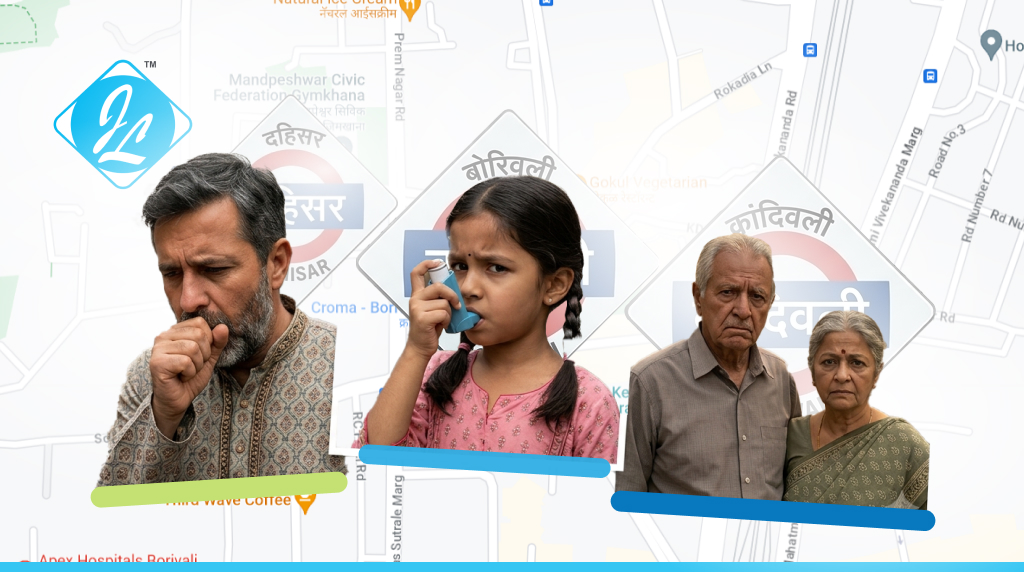
Mumbai Construction Dust: What Residents of Borivali, Kandivali & Dahisar Should Know
How redevelopment, rising air pollution and everyday dust may be affecting your family’s health — and why paying attention to the warning signs matters.
Mumbai is rebuilding itself at an extraordinary pace. Old residential buildings are making way for modern towers, roads are being dug up, and construction sites have become a familiar sight across the city’s neighbourhoods.
But behind this transformation lies a growing concern: What are we breathing every day?
For residents of Borivali, Kandivali and Dahisar, construction dust is no longer simply a matter of dirty balconies, dusty windows or the need to clean our homes more frequently. Fine particles suspended in the air can enter our respiratory system, aggravate existing illnesses and create additional health challenges, particularly for children, senior citizens and people living with asthma or other heart and lung conditions.
As Mumbai’s redevelopment continues, protecting our health must remain just as important as building our city’s future.
Mumbai’s changing skyline — and the air we breathe
Mumbai’s construction activity is visible everywhere. From the demolition of older buildings to excavation, cement mixing, debris transportation and roadwork, redevelopment can release substantial quantities of dust into the surrounding environment.
Construction is not the only source of air pollution. Vehicle exhaust, industrial emissions, road dust, waste burning and weather conditions also contribute. When winds are weak and pollutants cannot disperse effectively, pollution can accumulate near ground level.
Get started
Book your blood test
We will confirm your home visit shortly.
The result is an environmental concern that deserves our attention, particularly in densely populated residential areas where homes, schools, shops and construction sites may exist close to one another.
What do Mumbai’s AQI levels tell us?
The Air Quality Index (AQI) helps us understand the potential health implications of the air we breathe. It combines measurements of pollutants into a single number, making air quality easier to interpret.
In October 2026, Mumbai experienced renewed air-pollution concerns. Reports on October 21 cited an IQAir reading of 166, while the Central Pollution Control Board recorded a city reading of 114 on Monday, illustrating how readings can differ depending on the monitoring network, location and calculation method.
Monitoring data published by the Indian Institute of Tropical Meteorology for the morning of October 23 also showed different conditions across the suburbs, including an AQI reading of 98 at Abhinav Nagar in Borivali East and 64 at Kandivali West. These are time-specific readings, not permanent neighbourhood averages. Air quality can change considerably throughout the day.
Sources: Moneycontrol’s Mumbai air-pollution report and IITM’s Mumbai Air Quality Early Warning System.
These numbers tell us something important: air quality is not the same everywhere in Mumbai, and a single reading cannot tell us exactly what every family is breathing.
Residents should check current readings from official monitoring sources and pay particular attention to local conditions when pollution increases.
Why redevelopment dust deserves serious attention
Construction dust contains airborne particles released during demolition, excavation, cutting, drilling, cement handling and the movement of building materials. Road dust can also be lifted back into the air by passing vehicles.
Of particular concern are two categories of particulate matter:
- PM10: Inhalable particles that can irritate the nose, throat and respiratory passages.
- PM2.5: Much finer particles that can travel deep into the lungs and are associated with respiratory and cardiovascular health risks.
Not every dust particle has the same composition or health effect. However, prolonged or repeated exposure to polluted air can aggravate existing health problems and increase health risks over time.
The challenge is that we cannot always see these particles. A road may look relatively clean, and the sky may appear clear, yet fine particulate pollution can still be present.
For families living near demolition sites, redevelopment projects, busy roads or areas where debris is regularly transported, awareness and sensible precautions are essential.
Who is most vulnerable? Every generation has something to lose.
Air pollution does not affect everyone in the same way. Age, existing medical conditions, the intensity of exposure and the duration of exposure all matter.
1. Children: protecting the lungs that are still developing
Children are especially vulnerable because their lungs are still developing, and they often spend time playing, walking or travelling outdoors.
Exposure to polluted air can irritate their airways, aggravate asthma and contribute to breathing difficulties. Parents may notice a persistent cough, wheezing, throat irritation or symptoms that worsen during periods of poor air quality.
A child who repeatedly develops a cough should not automatically be assumed to have a routine seasonal infection. Persistent or recurring symptoms deserve appropriate medical assessment.
As parents, we do everything possible to provide our children with nutritious food, good education and a safe home. Clean air deserves a place on that list of priorities, too.
2. Working adults: the health cost of everyday exposure
Many residents spend hours commuting, working near roads, shopping in crowded markets or travelling through construction-heavy areas.
For some, the effects may appear as eye irritation, throat discomfort, coughing or breathlessness. People with asthma and other respiratory conditions may experience worsening symptoms.
Because exposure happens during ordinary daily routines, it can be easy to dismiss recurring discomfort as tiredness, changing weather or dust allergies.
Pay attention when symptoms persist or repeatedly return. Reducing exposure and seeking medical advice when needed can help you take a more informed approach to your health.
3. Senior citizens: extra care for an already vulnerable system
For older adults, air pollution can be particularly concerning when combined with existing lung disease, heart disease or reduced physical resilience.
A person who already experiences breathlessness may find outdoor activity more difficult during periods of poor air quality. Pollution can also aggravate existing respiratory and cardiovascular conditions.
Families should be alert to new or worsening coughing, unusual fatigue, wheezing or difficulty breathing in elderly relatives.
Protecting our parents and grandparents means more than asking them to stay indoors on dusty days. It also means taking their symptoms seriously and ensuring they receive timely medical attention.
4. People with asthma, allergies and chronic illnesses
People with asthma, chronic obstructive pulmonary disease (COPD) and certain cardiovascular conditions may be particularly sensitive to air pollution.
Pollution can trigger symptoms or worsen existing illness, although it is not necessarily the cause of every cough, allergy or breathing problem.
If you have a diagnosed condition, follow your doctor’s treatment plan, take prescribed medication as directed and seek medical advice if your symptoms become more frequent or severe.
Beyond breathing: why recurring symptoms should not be ignored
Air pollution is often discussed in terms of coughing and breathlessness, but its potential effects extend further.
Depending on the pollutants involved and the extent of exposure, poor air quality may contribute to:
- Irritation of the eyes, nose and throat.
- Increased respiratory symptoms and asthma flare-ups.
- Reduced lung function and worsening of existing lung disease.
- Increased strain on the cardiovascular system.
- Greater health risks associated with prolonged exposure to fine particulate pollution.
At the same time, fatigue, headaches, recurring infections and other health complaints can have many different causes. They should not automatically be attributed to construction dust.
The important message is not to become fearful of every symptom, but to stop ignoring symptoms that persist, worsen or interfere with daily life.
A medical professional can assess the likely cause and recommend the appropriate investigations, if needed.
What can families in Borivali, Kandivali and Dahisar do?
We cannot individually control every construction project or eliminate every source of urban pollution. However, we can take practical steps to reduce exposure and protect vulnerable family members.
1. Check the AQI before planning outdoor activities.
Use official air-quality monitoring sources, such as the IITM Mumbai Air Quality Early Warning System. Remember that readings can differ between monitoring stations and may change throughout the day.
2. Reduce strenuous outdoor activity when air quality is poor.
Consider adjusting outdoor exercise, children’s playtime and prolonged outdoor activities during periods of elevated pollution, particularly for people with existing respiratory or cardiovascular conditions.
3. Keep indoor dust under control.
Use damp dusting and wet mopping rather than dry sweeping, which can resuspend dust. Keep windows closed when nearby construction is generating heavy dust, while ensuring adequate ventilation when outdoor conditions improve.
4. Use suitable protection when necessary.
A well-fitting N95 or equivalent particulate respirator can reduce exposure to airborne particles when worn correctly. Ordinary cloth masks generally provide less reliable protection against fine particles. Masks are not a substitute for reducing exposure or following medical advice.
5. Encourage dust-control measures at construction sites.
Enclosures, appropriate water spraying, covered debris transportation, tyre washing and proper site housekeeping can help limit the spread of construction dust. Report persistent violations to the relevant civic authorities.
6. Do not delay medical assessment.
If coughing, wheezing or breathlessness persists, consult a qualified medical professional. Severe breathing difficulty, chest pain, blue lips or sudden confusion require urgent medical attention.
7. Consider investigations when clinically appropriate.
A doctor may recommend tests based on your symptoms, medical history and examination. These could include blood investigations, lung-function testing or imaging where indicated. Routine health check-ups can also help assess other health concerns, but no single blood test can diagnose the effects of air pollution or measure the amount of pollution a person has inhaled.
The importance of timely health check-ups
Many health problems do not announce themselves dramatically at first. Sometimes, the initial signs are subtle. At other times, recurring symptoms are dismissed because people are busy with work, school, family responsibilities or the demands of everyday life.
Timely medical assessment can help identify health concerns, guide further investigations and support appropriate treatment.
The right approach is not to undergo every available test out of fear. It is to consult your doctor when symptoms or risk factors warrant attention and to complete the investigations recommended for your individual needs.
For families, preventive health assessments can also provide an opportunity to review existing conditions, understand relevant risk factors and discuss appropriate screening with a healthcare professional.
Reliable laboratory results are an important part of this process. They help doctors make informed clinical decisions alongside the patient’s history, examination and other relevant findings.
Jariwala Laboratory & Diagnostics: standing beside our community
At Jariwala Laboratory & Diagnostics, our connection with Borivali, Kandivali and Dahisar goes beyond providing diagnostic services. We serve a community of families, working professionals, children and senior citizens who depend on timely, dependable laboratory testing as part of their healthcare journey.
When a patient comes to a laboratory, there is often a concern behind the test request. A parent may be worried about a child with recurring symptoms. An elderly person may be undergoing investigations following a change in health. A working adult may be seeking answers after weeks of unexplained discomfort.
Behind every sample is a person waiting for clarity, a family hoping for reassurance and a doctor who needs dependable information to guide the next step.
We understand the responsibility that comes with this trust.
Our team continues to work diligently through a constant flow of patients and diagnostic requests. Our trained laboratory doctors and assistants work rigorously to maintain quality, accuracy and dependable service, recognising that every report carries real importance for the person receiving it.
We strive to provide high-accuracy pathological reports within 12 hours, helping patients and their treating doctors move forward with timely information, subject to the test’s requirements and processing conditions.
Our commitment is to support informed healthcare through careful laboratory work, professional responsibility and respect for every patient who walks through our doors.
As Mumbai continues to grow and redevelop, we hope that the health of its people receives the same attention as the buildings rising around them. We encourage residents to remain aware of air quality, take persistent symptoms seriously and seek timely medical advice rather than living with uncertainty.
Our responsibility to every patient
For us, diagnostic work is more than a daily routine. It is a responsibility we carry with passion to serve you better.
Every day, our trained doctors and laboratory assistants work with dedication, managing a continuous flow of patients and samples while striving to uphold the standards of accuracy, care and timely reporting that our community deserves.
We recognise the effort behind every investigation, the concern behind every doctor’s prescription and the hope that accompanies every patient waiting for a report.
At Jariwala Laboratory & Diagnostics, we honour that trust by striving to deliver accurate pathological reports within 12 hours, with diligence, care and a deep sense of responsibility towards the health of our community.
Because behind every report is a human life — and every life deserves our best.
Jariwala Laboratory & Diagnostics — serving Borivali, Kandivali and Dahisar with care, commitment and trust.